Why CingjingWhy Cingjing Is Good for Stargazing
Stargazing comes down to two things: high enough elevation and low enough light pollution. Cingjing happens to meet both.
Central Cingjing sits at about 1,750 to 1,900 meters, and SheepVillage is close to 1,920 meters. The altitude thins the atmosphere, so stars look brighter and twinkle less. As for light pollution, Cingjing isn't densely developed, there are no large towns nearby, and street lights along Highway 14A are sparse, so after dark the sky is far darker than down on the plains.
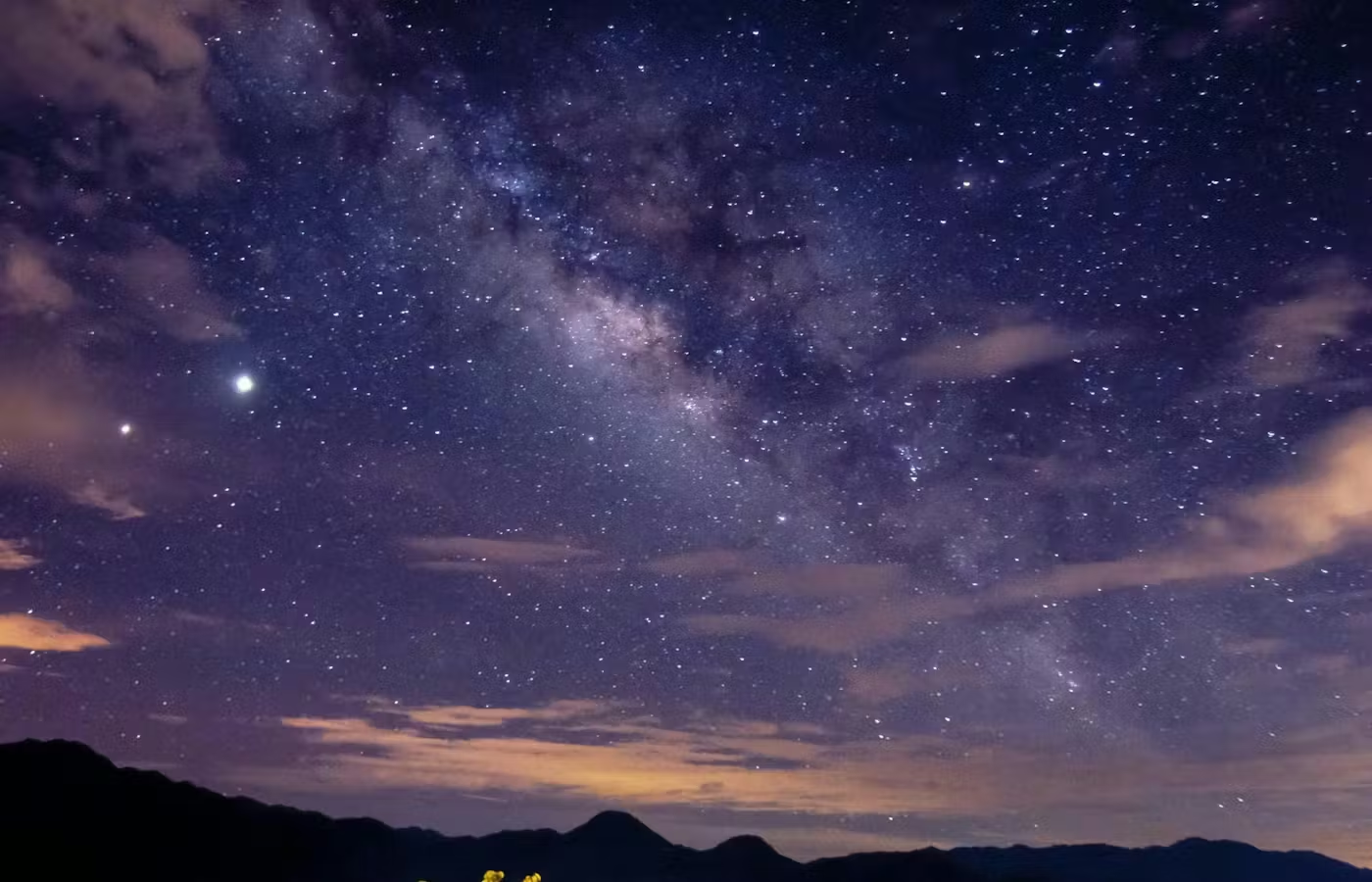
What matters even more is the location. There are no buildings at all across the road in front of SheepVillage, and the view stretches all the way to the distant valley. In summer the Milky Way core rises from the south, facing right toward the front of the homestay, and the whole arc is almost fully visible.
Every night after nine, we turn off the outdoor lights to keep the garden and trail as dark as possible. It isn't hard to do, but few homestays go out of their way to do it for their guests' stargazing.
Best SeasonThe Best Months for Stargazing in Cingjing
The short answer: summer, June through August, is the best time for stargazing in Cingjing.
Summer is when the Milky Way core is most visible. From late May, the core region rises from the southeastern horizon, peaking in June and July, with the whole band arcing from south to north across the night sky. Look up from the Cingjing Farm livestock trail and the Milky Way is almost directly overhead, a feeling no photo fully conveys.
Best: June, July, August (Milky Way core highest, best visibility)
Good: late May, September (Milky Way still visible, slightly lower)
Autumn-winter: October to December (no Milky Way core, but you can see winter constellations like Orion, with excellent clarity on clear nights)
Check the moon phase too: the days around the new moon (the 1st of the lunar month) have the least moonlight and are the golden window for stargazing. The StarWalk moon calendar shows each month's phases and moonrise/moonset times, with a sky-guide feature too.
Autumn and winter are worth it as well. Clear winter nights in Cingjing have excellent transparency; in low humidity and low temperatures, stars twinkle even less, and you can sometimes see even more stars with the naked eye, just without summer's spectacular Milky Way arch.
Whatever the season, always check the weather before you go. Mist shifts quickly in the Cingjing mountains, and even with a clear forecast, fog can roll in after dark. Taiwan's Central Weather Administration three-hourly forecast or Windy.com's cloud forecast are both fairly accurate. Sometimes if you wait until the small hours, the clouds clear, and that's the best moment.
Where to WatchHow to Stargaze at SheepVillage
You don't need to head out to find a stargazing spot: there are several good ones right around SheepVillage, and you can start the moment you step outside.
Cingjing Farm Livestock Trail
The Cingjing Farm livestock trail next to the homestay is the spot with the least light pollution. The view ahead is completely open, with nothing blocking it, clear from southeast to southwest. In summer the Milky Way rises from this direction, and you can see the full arc sweep from the horizon all the way overhead.
The trail is flat and easy to walk; at night you can simply stop and sit by the path, or look up toward the southern sky. No special equipment needed, just step outside.
The Front Viewing Deck
There's a viewing deck on the front side of the homestay, with views stretching to the distant valley. It's large enough for about 20 people to stand and stargaze at once, ideal for friends traveling together or exclusive-rental guests heading out to watch the sky together. The surface is level, with no steps, so it's safe to walk at night.
Large Second-Floor Balconies
If you're staying in a room with a balcony, the large second-floor balconies are also great for stargazing. They're wide enough to set up chairs and a tripod, ideal for travelers who want to stargaze comfortably for a long stretch, with less worry about dew on the gear. See the room rates for each room type.
We turn off the lights after 9pm to reduce light pollution. Once you're outside, give your eyes at least 15 minutes to adapt to the dark, and avoid looking at your phone screen during this time. You'll notice more and more stars appear, brighter and brighter. For a flashlight, use red-light mode so you don't ruin your dark adaptation.
Choose a clear night to stay, and the livestock trail becomes your observatory.
2F balcony rooms have the most open views; exclusive rental gives you the whole garden.
Before You GoBefore You Go
What to Wear
This is the most underestimated part. Summer days in Cingjing are about 25 to 28°C and feel comfortable, but nights cool quickly, usually only 12 to 16°C after 10pm, and with the wind it feels even colder. Standing still for long stretches while stargazing, your body doesn't generate heat, so a light jacket is nowhere near enough.
- Summer stargazing: a thick jacket or light down jacket and long pants, plus a spare layer
- Autumn-winter stargazing: a heavy down jacket, beanie, and gloves, Cingjing winter nights can drop below 5°C
Check the Moon Phase: Avoid the Full Moon
Moonlight is the stargazer's biggest enemy. A full moon is as bright as hundreds of stars combined and washes out the faint Milky Way entirely, so you see nothing. Try to avoid the lunar 13th to 17th (the five days around the full moon): even with clear weather, stargazing during this window is greatly diminished.
The best window is the three days around the new moon (lunar 1st), when the moon stays down all night and the sky belongs entirely to the stars. If your dates are set and the moon phase isn't ideal, you can also pick nights when the moon rises late and stargaze in the hours before it comes up.
Best: lunar 28th, 29th, 1st, 2nd, 3rd (around new moon, almost no moonlight)
OK: lunar 4th to 8th, 23rd to 27th (moon rises late or sets early, leaving a window after dark)
Avoid: lunar 13th to 17th (around full moon, very strong moonlight, Milky Way not visible)
Tool: the StarWalk moon calendar, which shows daily moonrise and moonset times
Check the Weather
Mist shifts quickly in Cingjing, and even on a clear day, fog can roll in after dark. We recommend checking the live weather again on the night of your stay. Sometimes the clouds clear around one or two in the morning, and that's the best moment, as long as you're still awake.
Dark Sky ParkCingjing Dark Sky Park & Hehuanshan Stargazing
If you want a more professional stargazing experience, local operators near Cingjing offer stargazing activities around the Dark Sky Park and Hehuanshan.
Cost: NT$850 per person
Includes: guided sky tour with commentary
Location: Cingjing Dark Sky Park / Hehuanshan area
From SheepVillage: about a 25-minute drive
Interested guests can just tell us after booking, and we'll help arrange it.
The advantage of a guided tour is that they can quickly find specific objects and show you details invisible to the naked eye through a telescope, like the outline of lunar craters or Saturn's rings. For travelers stargazing seriously for the first time, having someone guide you into the world of the night sky makes a big difference.
That said, if your goal is to photograph the Milky Way or simply enjoy it quietly, the Cingjing Farm livestock trail is already more than enough. Hehuanshan's Wuling sits at 3,275 meters with, in theory, an even wider view, but it requires driving up the mountain and the weather conditions are harsher. They're different experiences; just choose based on your itinerary and how you're feeling this trip.
Hehuanshan GuideHeading to Hehuanshan? A Few Recommended Spots
If you want to go higher to see the stars, the Hehuanshan area is worth planning a night around. Above 3,000 meters, the atmosphere is thinner and light pollution lower, so the Milky Way is clearer still. Here are a few common stargazing spots:
Hehuanshan Visitor Center
The most convenient starting point. There's a spacious parking lot and restrooms right beside it, and you can stand on open ground and look up without any climbing. For travelers stargazing on Hehuanshan for the first time who don't want to walk far, this is the friendliest choice.
Sanlian Peaks (Three Peaks)
The small peaks below Hehuanshan's main summit, with open views on all sides. You can shoot sunrise, sunset, and the Milky Way, and at night even capture car-light trails on the mountain road. Many photography enthusiasts like to camp here and wait for the Milky Way.
Maya Platform
The first viewing platform on Hehuanshan's main summit, known for its stone steps. The Milky Way rises from behind the platform, making for strong compositions. The view stretches out unobstructed, a popular spot for shooting the Milky Way arch.
Hehuan East Peak Abandoned Cable Car Station
A relatively secluded spot, where the old cable car station's structure against the Milky Way makes for a striking scene. There are no buildings blocking the view and light pollution is extremely low. It takes some stamina and a sense of direction, so bring a headlamp and plenty of warm clothing, and check the road conditions before you go.
Above 3,000 meters, nights can drop below 0°C, so bring plenty of warm clothing. The mountain road has many curves at night, so it's best to learn the route during the day and drive slowly. If you're prone to altitude sickness, arrive early to give your body time to adjust.
Guests interested in a Hehuanshan stargazing tour can simply tell us after booking; it's NT$850 per person, and we'll help arrange it.
To see the Milky Way, you need a place dark enough.
SheepVillage turns off the lights; the sky is up to you.